Principal Investigator

At a Glance
The Pacala group’s work has continued to improve the representation of the carbon cycle in climate models, including empirical support for a new theory of evaporative water loss in plants and an explanation of tree behavior in response to drought. Additional work on the warming impacts of methane, including a collaboration with the Environmental Defense Fund, analyzed the methane budget of the US oil and gas infrastructure and provided new estimates for US emissions.
Research Highlight
The Pacala group’s CMI research continues to be focused on the carbon cycle and improving its representation in climate models. One of the most important factors that could limit the natural carbon sink is water limitation. Because evaporative water loss increases with temperature, global warming will water-stress plants even in locations with no decrease in rainfall. Water escapes plants from small valves called stomates. The group published a paper in 2016 that established a new theory of stomatal regulation1. This year, the team authored two papers showing that empirical data strongly support the new theory over the 40-year-old classical theory2,3.
The Pacala group also cleared up an important mystery impacting the carbon cycle. When drought kills trees, the trees that will eventually die usually grow quickly for up to a decade and then drop dead. No one could explain this behavior, even though drought-kill has the potential for large positive feedback in the carbon cycle. Drought from climate change kills trees, releasing carbon to the atmosphere, causing further climate change, and so on. The group’s new paper offers a simple explanation consistent with all available data.
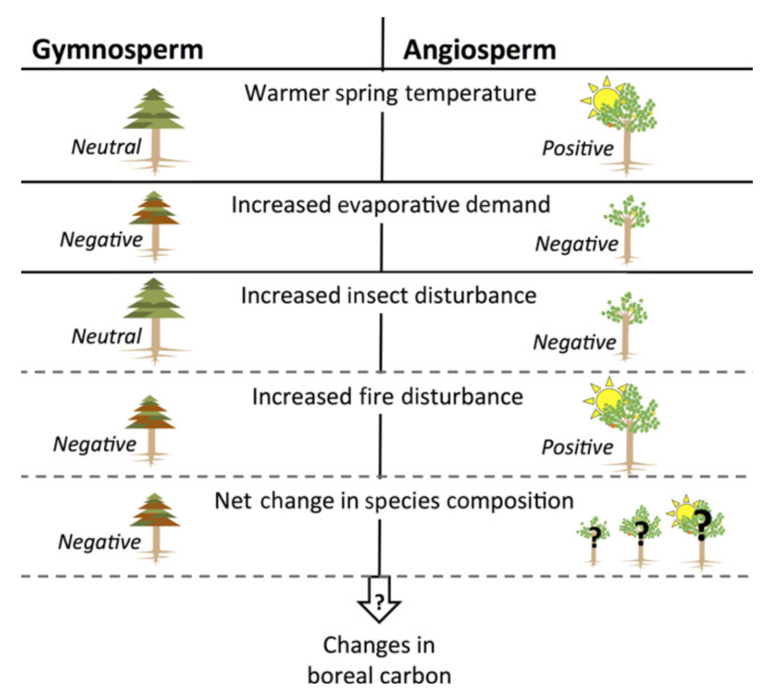
The new and advanced model of the terrestrial biosphere and carbon cycle that the group has been working on for many years was implemented this year in GFDL’s next-generation Earth System Models, which will be used in the next Intergovernmental Panel on Climate Change report. This model contains all of the team’s recent findings about stomatal regulation and, as a result, has enhanced ability to model water limitation of the terrestrial carbon sink. The model also contains the results of past CMI-funded research on fire and many other topics.
Finally, Pacala continued his work with the Environmental Defense Fund methane project. He and collaborators published one paper in Science calling for a new standard for reporting warming impacts of methane. He also completed analysis of the synthesis of the past five years of work: a methane budget of the US oil and gas infrastructure, from well to end use. This work shows that US emissions are 60% higher than the Environmental Protection Agency’s estimates because of upstream emission. The paper is currently in review at Science.
References
1 Wolf, A., W.R.L. Anderegg, & S.W. Pacala (2016). Optimal stomatal behavior with competition for water and risk of hydraulic impairment. PNAS. doi: 10.1111/pce.12852.
2 Anderegg, W.R.L., A. Wolf, A. Arango-Velez, B. Choat, D.J. Chmura, S. Jansen, T. Kolb, S. Li, F. Meinzer, P. Pita, V. Resco de Dios, J.S. Sperry, B.T. Wolfe, & S.W. Pacala (2017). Plant water potential improves prediction of stomatal models. PLOS One, 12(10), doi: 10.1371/journal.pone.0185481.
3 Anderegg, W.R.L., A. Wolf, A. Arango-Velez, B. Choat, D.J. Chmura, S. Jansen, T. Kolb, S. Li, F. Meinzer, P. Pita, V. Resco de Dios, J.S. Sperry, B.T. Wolfe, and S.W. Pacala, 2018. Woody plants optimize stomatal behavior relative to hydraulic risk. Ecology Letters, in press.
4 Trugman, A.T., D. Medvigy, W.R.L. Anderegg, and S.W. Pacala, 2017. Differential declines in Alaskan boreal forest vitality related to climate and competition. Glob. Change Biol. 24: 1097-1107. doi: 10.1111/gcb.13952.