
Principal Investigator

At a Glance
Field studies in Antarctica and lab experiments with cold-adapted microalgae yield new insight into the efficient sequestration of CO2 by high latitude oceanic ecosystems and their response to a global climate.
Research Highlight
High latitude oceans are major contributors to global primary phytoplankton production with the Southern Ocean alone accounting for around 20% of annual global biomass. A large proportion of this production is confined to continental shelf regions such as the Western Antarctic Peninsula, where intense phytoplankton blooms, common in the spring, provide the basis for a short food web, transferring algal biomass to krill, seals and whales with high efficiency and resulting in a high degree of carbon dioxide (CO2) sequestration. The physiological and biochemical adaptations that allow Antarctic phytoplankton to grow rapidly and sustain high productivity in very cold water are not well understood.
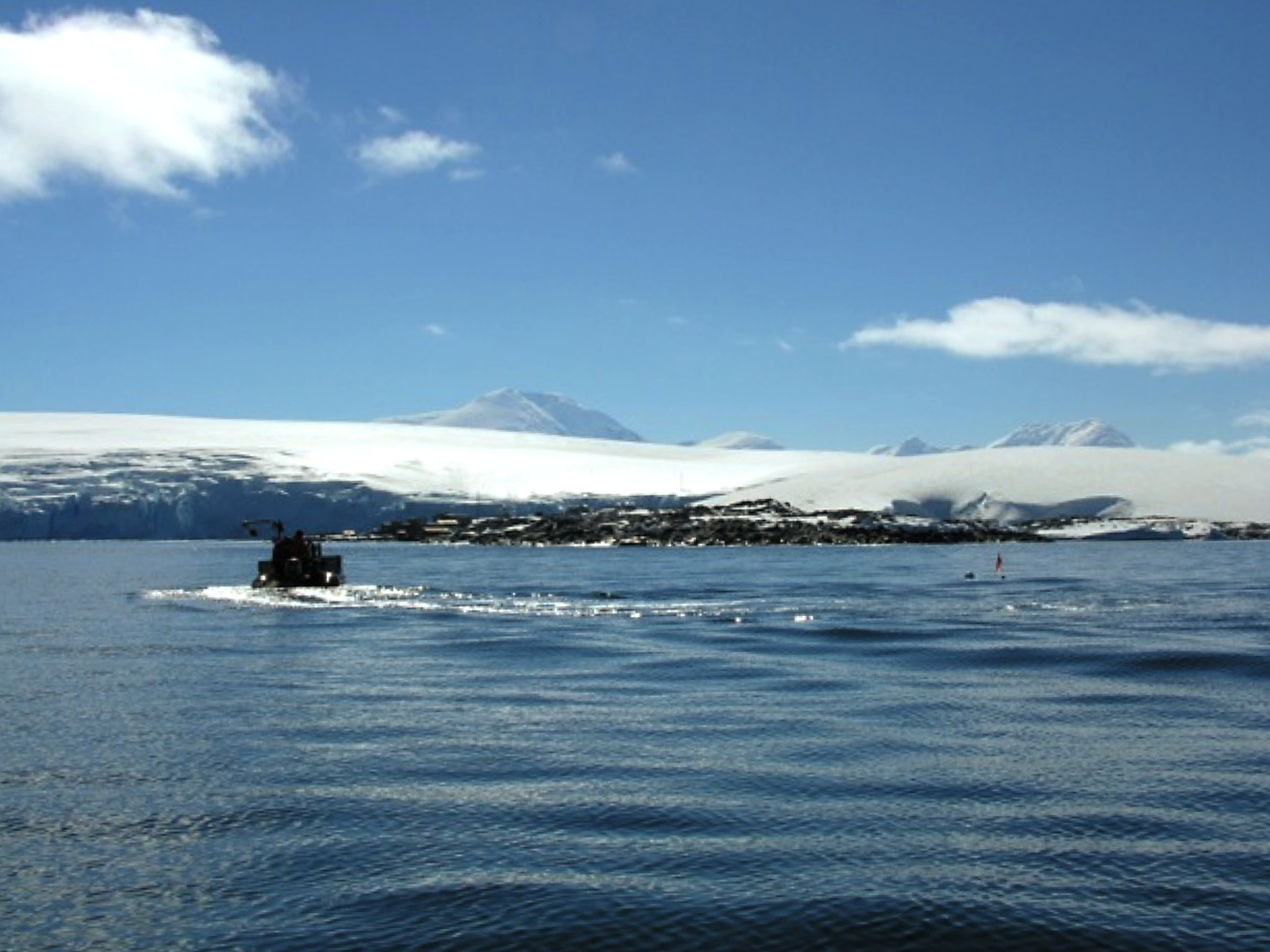
Field data from a six-month deployment at Palmer station (see Figure 1.5) in the Western Antarctic Peninsula, complemented with laboratory experiments on model phytoplankton species, has provided the Morel group with new insights into the adaptations responsible for high biological productivity in cold waters. These results also provide a basis for predicting the most likely responses of Antarctic flora to changing environmental conditions.
In high latitude ecosystems, enzymatic cellular processes for organisms fundamentally slow down due to low temperature. However, cold-adapted microalgae resolve this problem by
- having many of their key enzymes exhibit small structural variations that allow relatively rapid turnover rates at low temperatures (biochemical adaptation); and
- synthesizing far larger cellular concentrations of the essential enzymes for which no cold-adapted form exist (physiological adaptation).
The net result is a biochemical composition of high latitude phytoplankton different from that of temperate species, that includes an unusually high protein content.
In addition, high latitude marine ecosystems exhibit relatively low rates of respiration. This is due to the synthesis of high energy compounds (ATP) via photochemical rather than respiratory processes and the long duration of the light period in the austral summer.
High latitude oceans and the Western Antarctic Peninsula are now experiencing some of the most extreme warming on the planet; the low buffering capacity of high latitude seawater will result in a particularly intense degree of acidification in response to rising anthropogenic CO2). The Morel group’s studies of the mechanisms controlling the rate of photosynthetic biomass production in high latitude marine ecosystems will help ascertain how Antarctic (and Arctic) marine ecosystems respond to ongoing warming and acidification. These experimental results provide a basis for collaboration with colleagues at the Geophysical Fluid Dynamics Laboratory to develop Earth System Models with mechanistic representation of biological processes suited to high latitude oceans.
The ultimate goal is to more robustly assess the consequences of climate warming and acidification to carbon uptake and biogeochemistry in the Arctic and Antarctic oceans.